Peephole Camera vs Video Doorbell for Renters (2026 Comparison)
You want to see who's at your door before you open it. As a renter, you've got two realistic options: a peephole camera that uses the peephole hole you already have, or a battery video doorbell mounted beside your door. Both avoid drilling and wiring. But they solve the problem differently, and picking the wrong one means fighting your lease for nothing.
This peephole camera vs video doorbell comparison is written the renter way: installation damage, landlord rules, real-world limitations, and which one fits your specific situation.
New here? Start with our Renter-Friendly Smart Home: The Complete Starter Guide. This article is part of that series.
The Two Options, in 30 Seconds
Peephole camera: a small digital camera that fits into (or replaces) your door's existing peephole. The screen sits on the inside of your door. No new holes, no exterior mount, it uses the hole that's already there.
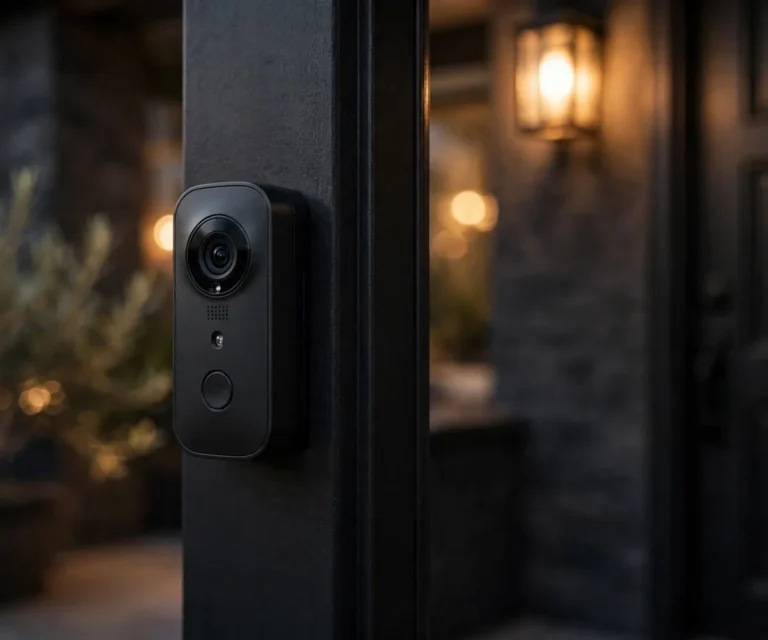
Battery video doorbell: a wireless doorbell with a camera that mounts on the doorframe or wall beside your door, usually with adhesive or a no-drill bracket. It rings your phone and lets you talk to visitors. (We covered the full renter playbook in our video doorbells for apartments guide.)
Head-to-Head Comparison
| Peephole camera | Battery video doorbell | |
|---|---|---|
| New holes drilled | None: uses the existing peephole hole | None: adhesive or clamp mount |
| Exterior modification | None visible (looks like a normal peephole from outside) | Visible device outside your door |
| Landlord friction | Very low: nothing new is attached to the building | Medium: anything outside your door may need written permission |
| Doorbell button | Usually no (some models add one) | Yes: the core feature |
| Two-way talk | Basic on most models | Strong: it's the main use case |
| Video quality | Decent, fixed fisheye view of the hallway | Better, wider angle, often with HDR |
| Night vision | Infrared through the peephole works well | Works, but hallway lighting varies |
| Battery | Small battery, charges via USB from inside: lasts weeks to months | Larger battery, 1–6 months depending on hallway traffic |
| Package detection | No: points at the hallway, not the ground | Yes on most models |
| Move-out reversal | Swap the original peephole back in 5 minutes | Peel off adhesive, unclamp bracket |
| Typical price | Usually cheaper | Mid-range |
Why Peephole Cameras Are a Renter's Secret Weapon
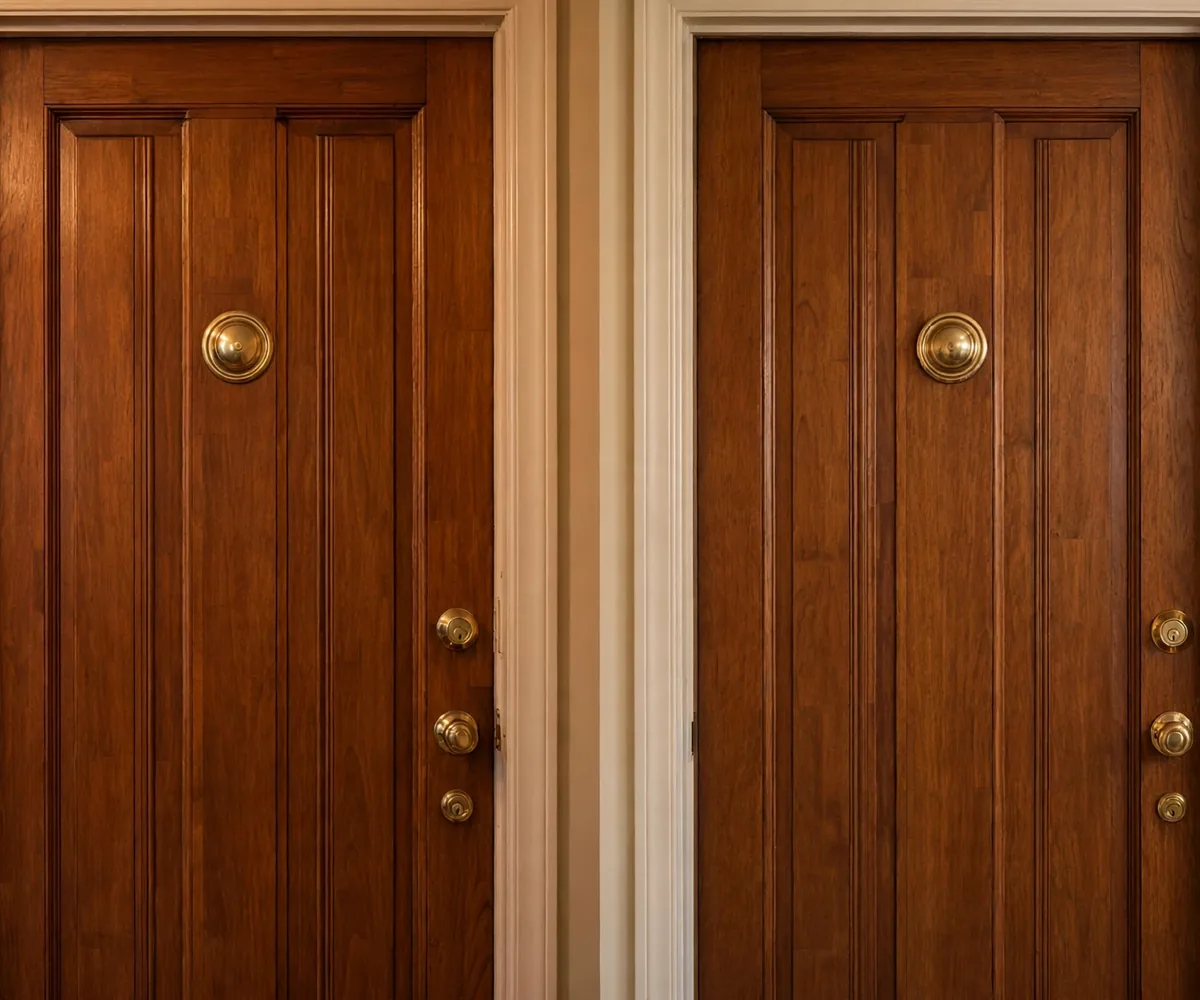
The magic of a peephole camera is that it doesn't look like a modification. From the hallway, it looks like an ordinary peephole. Nothing is screwed to the wall, nothing hangs off your doorframe. For renters in buildings with strict exterior rules, this is often the only door camera that doesn't start a conversation with the landlord.
How it works: you unscrew the existing optical peephole (the little glass lens), slide the camera barrel through the same hole, and tighten it from the inside. The indoor screen mounts on the door's interior. When you move out, you reverse the process, put the original peephole back. Five minutes, zero trace.
Before you buy, measure your peephole. Standard door peepholes are usually around 12–14mm (about half an inch) in diameter, but older doors vary. Most peephole cameras fit the standard size, check the product specs against your measurement, and check your door's thickness too (most fit 35–60mm doors).
Where Peephole Cameras Fall Short
Honesty first: peephole cameras are not doorbells:
- No doorbell button. Visitors knock or knock-adjacent. Some newer models include a small button, but most don't ring anything, you only know someone's there if you check the screen or get a motion ping.
- Fixed fisheye view. You see the hallway directly in front of your door, distorted at the edges. You won't see packages on the ground or much to the sides.
- Weaker smart features. Basic models are just a screen on your door. Connected models with motion alerts and phone apps exist but cost more and drain battery faster.
- Indoor screen needs power. The display on the inside of your door runs on its own battery or USB power, one more thing to charge.
The Decision Framework: Which One Is Yours?
Here's how to settle the peephole camera vs video doorbell question for your situation:
Choose a peephole camera if:
- Your building bans anything mounted outside your door (check the lease first)
- Your landlord is strict, or you'd rather not ask for permission at all
- You mainly want to see who's knocking, not run a full doorbell system
- Your hallway is quiet and you don't need motion-zone filtering
Choose a battery video doorbell if:
- You can get written permission for an exterior mount (email counts)
- You want a doorbell button, package detection, and rich motion alerts
- You're comfortable with a visible device outside your door
- Your hallway Wi-Fi reaches the mounting spot (test it first, see our doorbell guide for the checklist)
Get both? Overkill for most renters. Pick the one that matches your lease, not your wishlist.
The Renter Playbook for Peephole Cameras
Even though it's low-friction, do this right:
- Keep the original peephole. Put it in a labeled ziplock bag the day you swap it. You'll need it on moving day, and hunting for a 50-cent part at 11pm is miserable.
- Photograph the door before and after. Move-out documentation takes 30 seconds and ends deposit arguments.
- Don't force it. If the barrel doesn't fit smoothly, stop, forcing it can crack the door's finish. Measure again.
- Disable the indoor screen's always-on mode if battery life disappoints. Wake-on-knock or wake-on-motion modes stretch a charge dramatically.
- Tell your landlord anyway (optional but smart). A one-line email: "I replaced the optical peephole with a digital viewer using the existing hole; I'll restore the original when I move out", turns a potential complaint into a non-event.
FAQs
Can my landlord ban a peephole camera? They can try, but it's a much harder case than a doorbell: you're using a hole that already exists, nothing is attached to the building's exterior, and it's fully reversible. Still, if your lease bans "modifications to doors," the 30-second email above covers you.
What if my door has no peephole? Then don't create one: drilling a new hole in a door you don't own is exactly the kind of thing that costs you a deposit. Use a battery video doorbell (with permission) or a window-facing indoor camera instead.
Can I take it with me when I move? Yes, that's the point. Unthread it, reinstall the original peephole, factory-reset the device in its app, and pack it. Setup in the new place takes ten minutes if the new door has a standard peephole.
Do peephole cameras work at night? The infrared models do, the hallway just needs to be within a few meters, which it always is. One advantage over window cameras: no glass reflection to deal with.
Which is cheaper overall? Peephole cameras usually cost less upfront, and there's no subscription pressure, most are simple devices. Battery doorbells cost more and some brands push cloud plans for video history. For renters, free local clips or event storage matters (same rule as our camera buying guide, check what works without a subscription).
The Bottom Line
For renters, the peephole camera is the path of least resistance: no permission battles, no exterior hardware, fully reversible in minutes. The battery video doorbell does more (button, packages, smart alerts) but it needs a landlord's okay and a visible mount outside your door.
In the peephole camera vs video doorbell debate, match the device to your lease first, your wishlist second. Either way, when moving day comes, your door camera comes with you, and the door looks exactly like it did on day one.